
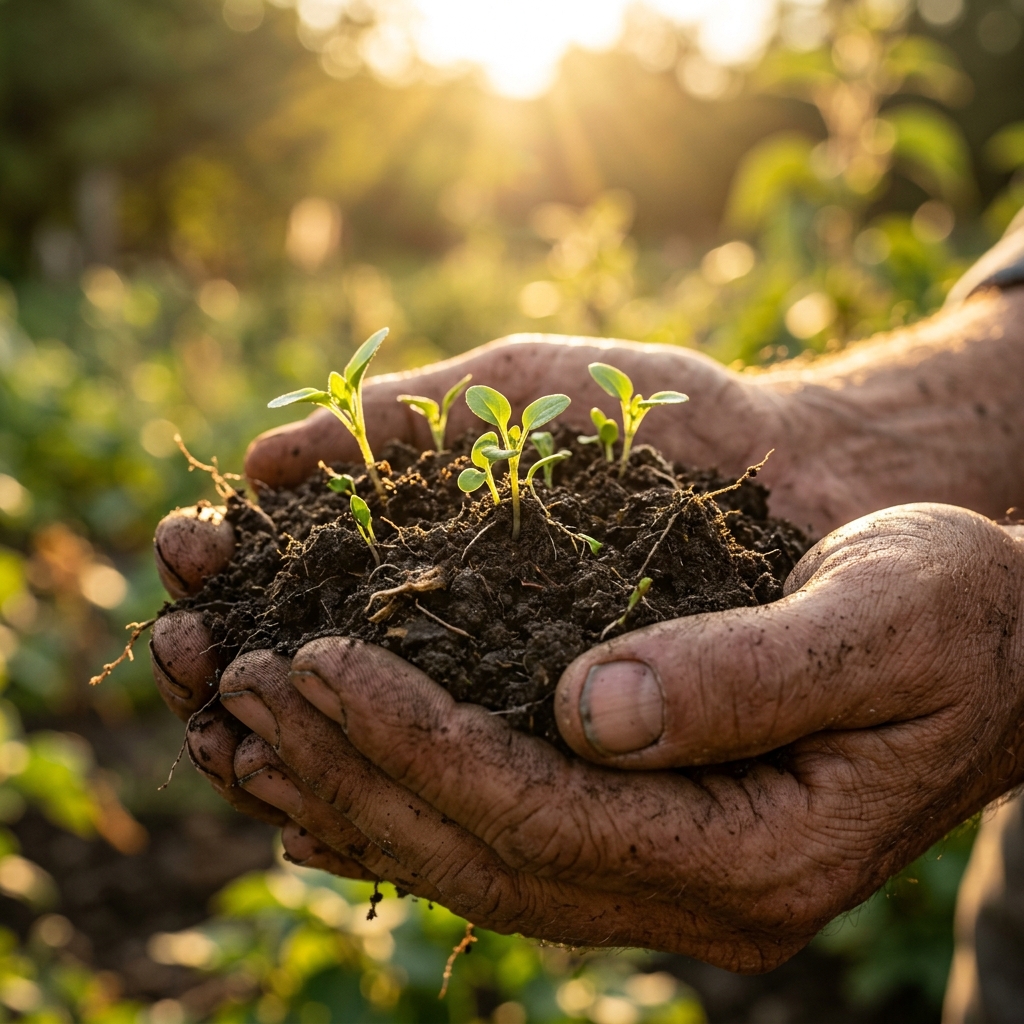
My wife once called this land "hell." Today, I stand beside a small forest on that same piece of land in Senga village and look across the valley.
On the opposite hill, the ground lies bare - a tree here, another there. Nineteen years ago, the land beneath my feet looked just like that. Today, it is alive, with insects humming and birds singing through the forest canopy.
I often pause here and reflect on that journey. It reminds me of something simple but powerful: we can make the earth a paradise if we choose to. It is possible.
The First Look
When I first saw this land in late 2007, it was exhausted. Only one aged mutuba tree stood tall. Everything else had long been cleared, mostly for charcoal.
The land itself - about five acres - had been spotted by my brother Elly, who was then running a shop for me in Ndejje township near the university. At the time, I lived in Kampala and worked in Entebbe. I wanted farmland, and Senga offered that, though it felt far.
The journey there was tough: from Kampala to Ndejje by taxi, then on a motorcycle through roads full of deep potholes and gullies. I stood on the land and weighed my options. But something in me had already decided. I paid.
Losses and a Quiet Decision
In early 2008, I began visiting on weekends, trying to establish a presence. My first attempt at farming failed. I cleared about an acre and planted maize, but when I returned three weeks later, the weeds were taller than the maize. Loss number one.
A few months later, Rashid called to tell me that the government was distributing free coffee seedlings. He secured 400 for me. We cleared another acre and planted them. When I returned weeks later, goats and cows had destroyed almost everything. Loss number two.
I abandoned the land for a while. Later, after a family used it to grow maize, I made a quiet decision: I would leave about an acre undisturbed. That untouched piece is today what the community calls Balikuddembe Forest.
"Places become what people make them."
William Odinga Balikuddembe
Continuity Changed Everything
In 2011, I planted maize again. This time, it worked. I also introduced bananas where coffee had been destroyed, and worked with a neighbour who became a caretaker. He later moved onto the land, building a small shelter. That changed everything.
For the first time, there was continuity. We expanded - cassava, potatoes, avocado from seeds I planted myself, and other crops. The bananas thrived. This time, the coffee grew under the shade of bananas.
I made one rule very clear from the beginning: no tree was to be cut without my permission. I wanted the land to heal.
A Living Laboratory
Over the years, the land has continued to grow - in soil, in crops, in trees, and in meaning. Bananas, coffee, and avocado have remained constant. At one point, I became known for pumpkins.
Slowly, the transformation became undeniable. Today, what stands here is more than a farm. It is a living laboratory - a place where I have learned, sometimes through loss, how land responds to care, patience, and intention.
Each time I look across at that bare hill, I am reminded: this land was once like that. And this land changed.
Written by
William Odinga Balikuddembe
Science journalist, communicator, farmer, and founder of Bill of Senga.